The AI hardware sector is witnessing a massive shift as robotics startup Theker recently secured a whopping $85 million in funding. Unlike traditional humanoid robots designed around rigid, fixed forms, Theker is pioneering reconfigurable AI robots engineered to adapt to various tasks rather than specializing in just one. For WordPress publishers and e-commerce store owners tracking the intersection of artificial intelligence and physical supply chains, this funding round marks a pivotal moment in how we think about automation.
How Reconfigurable AI Robots Shift the Automation Paradigm
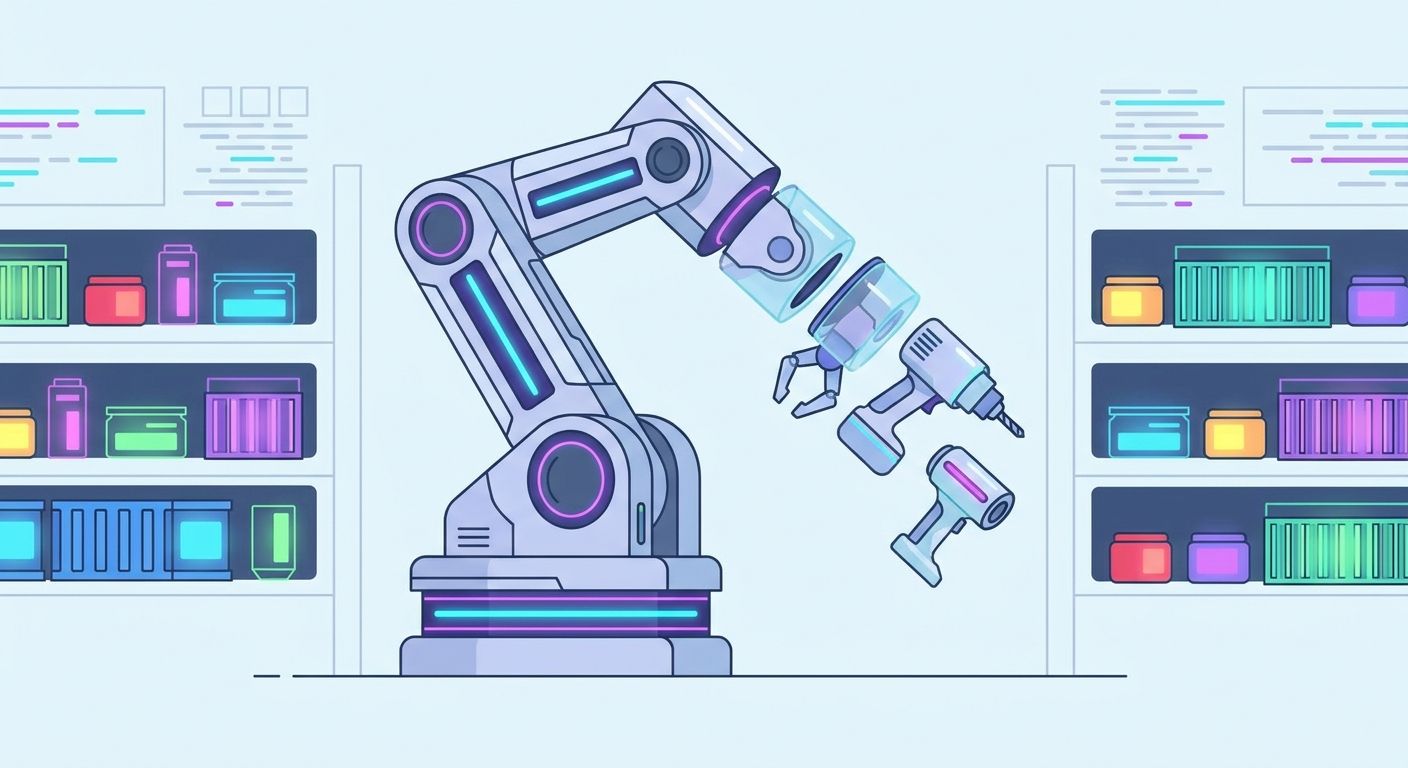
In a landscape dominated by humanoid machines from companies like Boston Dynamics, Theker’s approach is refreshingly pragmatic. Instead of mimicking human anatomy, their machines are modular, allowing factory managers to reconstruct them based on immediate production needs. This highly adaptable hardware architecture relies heavily on advanced machine learning algorithms to learn new physical tasks on the fly.
This leap in physical automation has profound implications for digital businesses. As we discuss in our deep dive on AI agents in e-commerce workflows, the line between digital inventory management and physical warehouse fulfillment is rapidly blurring. WooCommerce store owners who rely on localized warehousing could soon see highly optimized, automated packaging facilities operated by these adaptable machines, driving down shipping costs and fulfillment errors.
Furthermore, integrating physical robotics with web platforms is no longer a futuristic dream. Developers are already building headless WordPress APIs to sync warehouse databases directly with store frontends. Utilizing modern WordPress shipping plugins with AI integration will allow store owners to dynamically coordinate with adaptable robotic hubs to change packaging sizes, logistics priorities, and sorting criteria on demand.
According to a report by TechCrunch, this $85 million investment will accelerate Theker’s deployment of modular systems across global warehouses. By focusing on adaptability rather than fixed physical forms, Theker is paving the way for a more democratized era of smart manufacturing, where even small-scale WooCommerce sellers can benefit from enterprise-grade robotic efficiency.