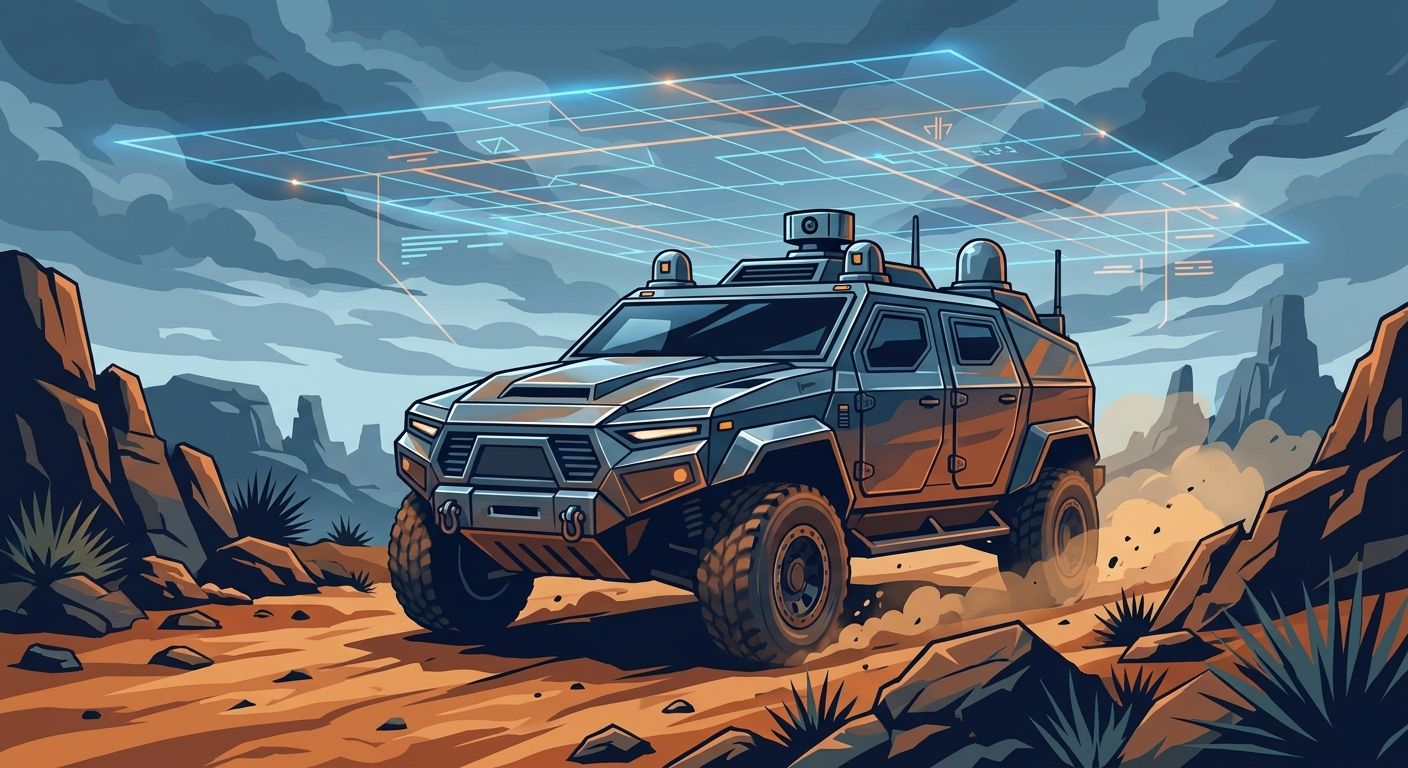
In a historic development for military technology, American autonomous ground vehicles are officially on the ground and active in Ukraine’s conflict zones. Maryland-based defense tech company Forterra has reportedly deployed over 100 of its self-driving, semi-autonomous All-Terrain Vehicles (ATVs) to assist in logistical operations, casualty evacuation, and reconnaissance. This deployment represents the first known operational use of American self-driving military ground systems in an active war zone.
According to reports highlighted by TechCrunch, these vehicles utilize advanced AI to navigate complex, off-road environments without relying heavily on GPS, which is often jammed in modern combat scenarios. The integration of artificial intelligence into physical machinery marks a major shift in how modern defense logistics are executed.
How Autonomous Ground Vehicles are Reshaping Modern Defense
The deployment of these autonomous ground vehicles highlights the rapid evolution of tactical AI. Forterra’s guidance system, AutoDrive, allows these vehicles to learn from their surroundings in real time, mapping paths through war-torn terrain and debris. This level of autonomy is crucial for minimizing human risk during dangerous supply runs.
As we explored in our deep dive into the ethics of AI-driven military robotics, the transition from software-based AI models to physical, autonomous combat support brings immense responsibility. This rapid technological evolution presents both an opportunity and a challenge for journalists covering the space.
For digital publishers and tech journalists reporting on these fast-moving global events, keeping audiences updated in real-time is vital. Many WordPress-powered news sites are leveraging machine learning to curate and summarize defense tech news. If you are managing a tech news site, you might want to look at our guide on essential WordPress AI plugins for modern publishers to enhance your editorial workflow and deliver breaking news efficiently.
As AI continues to transition from digital assistants to physical battlefield assets, the intersection of military robotics and global media reporting will only become more critical.